Smart Innovations
C.C.S. is a licensed mold assessment company. Services including: mold testing, mold assessment, air quality testing, and water damage repair. Your home or rental property should be tested for mold on a regular basis to ensure the air you are breathing is safe and clean.
C.C.S. is also qualified for environmental inspections.
If you have any questions, or would like a list of our references call or email:
David Gaertner
CMI, CEI, CEC, CQS.
Environmental Inspection Certification # 77184
Contractors State License # 781628 B
RRP Federal License # R-I-1937-10-01154
Email: ccsdesignconstruction@yahoo.com
Office: (310) 821-2851
Fax: (310) 821-0581

What is mold?
Mold is fungi that can be found both indoors and outdoors. Experts do not know how many species of fungi exist but estimates range from tens of thousands to over three hundred thousand. Mold grows best in warm, damp, and humid conditions (such as bathrooms), and spread making spores. Mold spores can survive harsh environmental conditions, such as dry conditions, that do not support normal mold growth.
What are common indoor molds?
| Some of the most common indoor molds are: Stachybotyrs: Also known as “toxic black mold”. It produces a gelatinous mass that dries after release; its dead spores are allergenic and toxigenic. It is a slow growing fungus that grows on building material with high cellulose content and low nitrogen content. it rarely grows outdoors and is difficult to find indoors unless it is physically disturbed. Cladosporium: Typically a black or dark green mold that grows slowly. It can be located both indoors and outdoors, but most commonly found on decaying plants. Aspergillus: Forms multicolored that are most commonly found in soil, plant debris, and house dust. Penicillium: A dense-brush-like green spore, which is commonly found in food, a major problem. However, it is beneficial as the drug penicillin and it is helpful in cheese in cheese production. |
Common sources of mold growth.
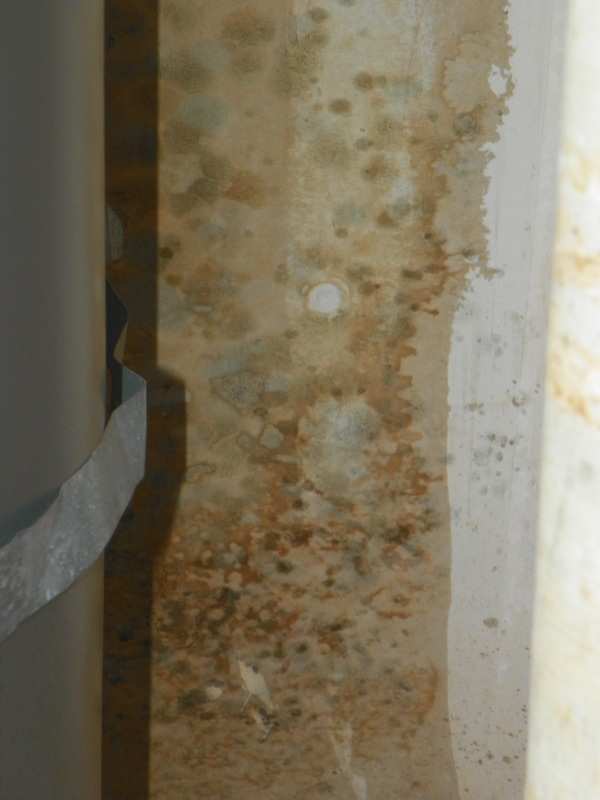
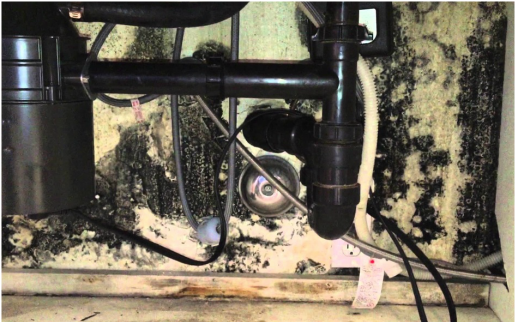
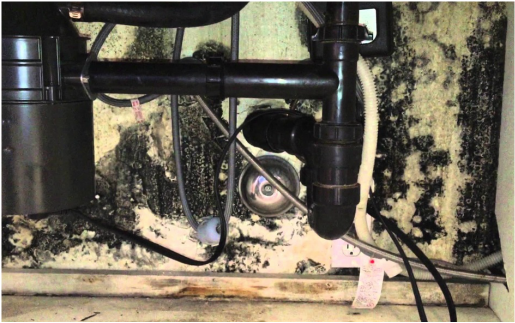
The following pictures illustrate some of the common signs and sources of water damage and/or mold growth. One key point about the pictures, is the fact that mold growth is often not visible or is hidden in inaccessible areas. Many of the following examples are mold problems due to water leaks that had been repaired in the past. The mold growth that resulted from the water damage was not fully addressed, though. Often, what building owners or maintenance personnel consider to be small water problems result in big mold problems. Any moisture problem has the potential to cause mold growth.
Take steps to prevent mold.
The best way to avoid exposure to indoor molds is to prevent their growth in the first place. Controlling moisture is the key to preventing indoor mold growth. The relative humidity of indoor environments should be maintained at 20-40% during the cooler months, and no more than 60% during the rest of the year. If and when moisture problems occur, it is important to act quickly to prevent mold spores from germinating. If wetness or spills are dried within 24-48 hours, mold growth will likely not occur.
This water heater closet in a high rise in Marina Del Rey California had water leaking into it from the water heater above when it sprung a slow leak. because of the heat from the water heater in the closet it was leaking into, it created humidity, which caused mold spores to grow
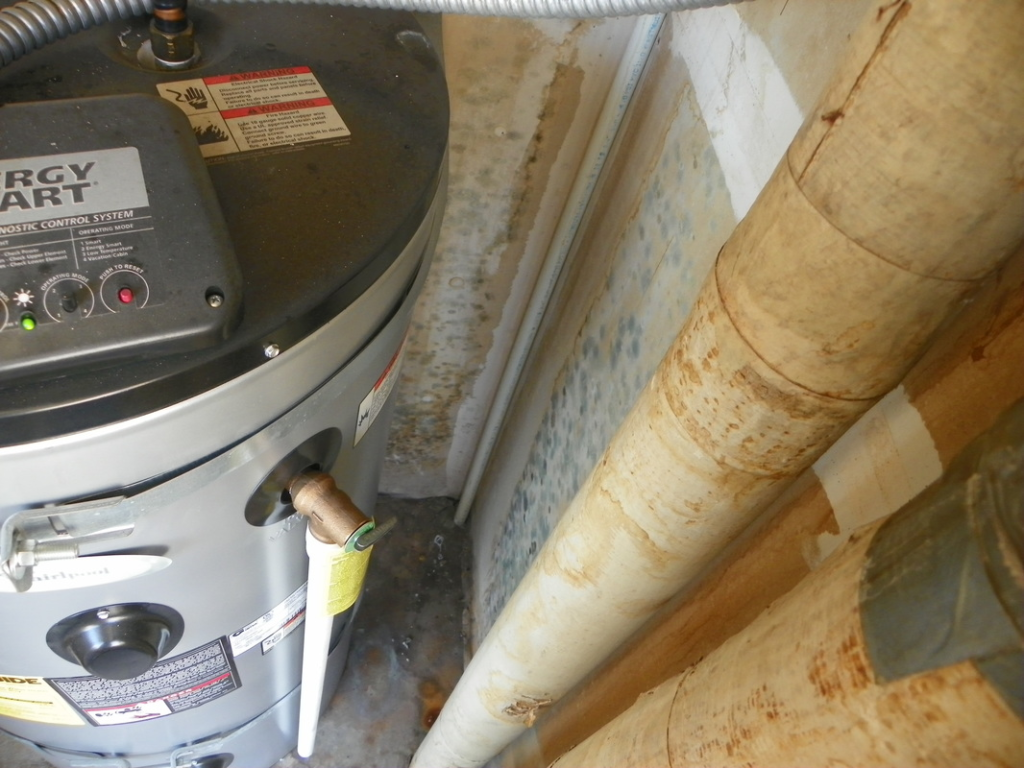
this mold was growing so well, that their was even parts that were growing outward.